*contains Affiliate-Links


One country that is definitely worth visiting for its unspoilt nature and authenticity is Laos. In the north of the country lies Luang Prabang, one of the most charming cities in Southeast Asia and a UNESCO World Heritage Site. The former royal city combines Buddhist spirituality, colonial architecture and impressive natural scenery. Golden temple roofs rise above palm trees, the Mekong River flows leisurely past the city, and just a few minutes outside, dense jungle landscapes with waterfalls and caves await you.
Luang Prabang is considered the cultural heart of Laos. Here you will encounter a very special atmosphere: quieter than many other cities in the region, yet rich in history, tradition and scenic beauty. In the morning, monks in their saffron-coloured robes walk through the streets, during the day you can explore temples and markets, and in the evening the streets transform into lively night markets.
In the following guide, you will find the most important sights, activities, hotel recommendations and practical tips for a stylish stay in Laos.
Getting to Luang Prabang
The charming UNESCO city of Luang Prabang in northern Laos can be reached in various ways – either as part of a tour of Southeast Asia or as a destination in its own right. My route took me from Vietnam to Laos with a flight via Hanoi. On some connections, luggage must be collected and rechecked during the transfer, so sufficient time should be allowed for the layover. The journey then continues to Luang Prabang, whose small international airport is only about 15 minutes from the historic city centre.
Those who wish to travel directly to Laos will also find good flight connections to Luang Prabang. Frequent international routes pass through hubs such as Bangkok, Singapore or Hanoi. These cities offer regular connections and make it easy to plan your journey.
After landing, transfer to the old town can be quickly organised. It is best to download the LOCA App , the Laotian answer to Grab, before you arrive. Due to the short distance, you can usually reach the hotel within a few minutes – a pleasant advantage after a day of travelling.
Practical tips for travelling to Laos


When travelling to Laos, it is worth knowing a few practical points in advance – this will make your stay much more relaxed.
Visa: Swiss citizens can currently enter Laos visa-free for up to 15 days. Your passport should be valid for at least six months. If you want to stay in the country longer, you can apply for a visa or extend your stay locally. Entry at Luang Prabang Airport is usually quick and easy.
Cash: The official currency is the Lao kip (LAK). Credit cards are sometimes accepted in larger hotels and restaurants, but in everyday life – for example, at markets, in tuk-tuks or in small cafés – cash is almost always used, even in supermarkets. ATMs are readily available in Luang Prabang.
Getting around: The old town of Luang Prabang is very easy to explore on foot. Tuk-tuks or taxis are commonly used for longer distances. The local ride LOCA App, which works similarly to Grab, is also convenient.
Visiting temples: As Laos is strongly influenced by Buddhism, appropriate clothing should be worn when visiting temples. Shoulders and knees should be covered, and shoes must be removed before entering a temple. Admission fees are often payable in cash.
Sights & Activities in Luang Prabang

The old town of Luang Prabang is a UNESCO World Heritage Site and is wonderful to explore on foot. Golden temples, colonial buildings and quiet alleys give the city a special atmosphere that is very different from the more hectic metropolises of Southeast Asia. Many of the most important sights are close together, while some of the most spectacular natural highlights are just a short drive outside the city.
Temples & Culture in the Old Town
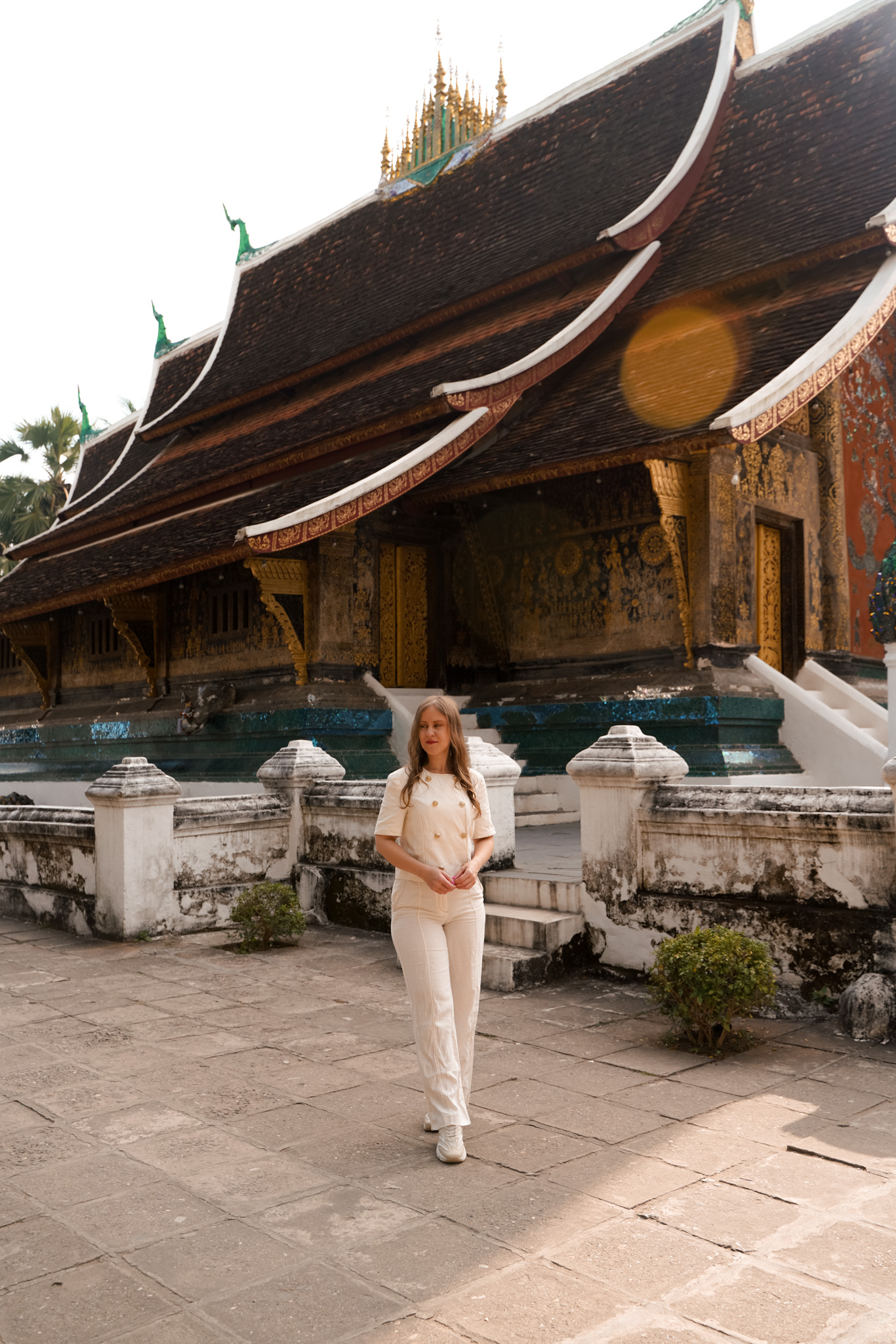

An important landmark of the city is Wat Xieng Thong, one of the most beautiful and important temples in the country. The ornate golden decorations, the curved roof and the peaceful location on the Mekong River make it a special place.

Not far away is the Royal Palace Museum. The former royal palace offers fascinating insights into the country’s history and now houses a collection of religious artworks and royal artefacts.


For one of the most beautiful views of the city, it is worth climbing Mount Phousi. From the summit, there is a panoramic view of the Mekong River, the old town and the surrounding mountains – particularly impressive at sunset.
Natural highlight: Kuang Si Waterfalls


About 30 kilometres south of Luang Prabang, in the middle of dense jungle and hilly countryside, lie the spectacular Kuang Si Falls. This multi-tiered waterfall is one of the most famous natural attractions in Laos and is considered by many travellers to be one of the most beautiful waterfalls in Southeast Asia. The water plunges down several limestone terraces, forming a series of bright turquoise cascades. The intense colour is caused by mineral-rich water and limestone deposits that reflect the light in a special way. You can also swim in the pools.

The Tat Kuang Si Bear Rescue Centre is also located directly at the entrance to the waterfall area. This conservation project primarily cares for rescued Asian black bears, also known as moon bears, which often originate from illegal poaching or the so-called bear farming industry. In spacious, wooded enclosures, the animals can recover and live as naturally as possible.
Visitors have the opportunity to learn more about the work of the centre, the threats to moon bears and species conservation in Southeast Asia. Information boards explain the background to the project, and from raised platforms you can watch the bears playing, climbing or resting. Your visit also supports the project, as part of the proceeds go directly towards the care, rescue and protection of the animals.
Mekong River & Pak Ou Caves

A boat trip on the Mekong is one of the most impressive and relaxing experiences around the UNESCO city of Luang Prabang. The mighty river has shaped life in the region for centuries, serving as a transport route, source of food and cultural lifeline. Traditional longboats and smaller excursion boats depart daily from the city’s banks, taking visitors on a peaceful journey through the impressive river landscape.
Many tours start in the morning or early afternoon and last several hours. The return trip in the late afternoon is particularly atmospheric, when the warm light of the setting sun bathes the Mekong in golden colours. The boat trip is therefore not just a means of transport to a destination, but an important part of the overall experience.

A popular destination on this Mekong cruise is the famous Pak Ou Caves, located about 25 kilometres upstream from Luang Prabang. The caves are situated on a steep limestone cliff directly above the water, at the point where the Nam Ou tributary flows into the Mekong. For centuries, this place has been considered a sacred site of Buddhism.


The complex consists of two caves: the lower cave, Tham Ting, which is lit by daylight, and the higher, darker Tham Theung, which can be reached via a staircase. Both caves contain thousands of Buddha statues made of wood, stone and bronze. They were brought here as offerings by believers, pilgrims and kings over many generations. The figures vary greatly in size and style – some are only a few centimetres tall, while others are almost life-size.
Visit to the elephant conservatory


Another special feature of many excursions around Luang Prabang is a visit to an elephant conservation centre, such as Mandalao Elephant Conservation. These projects take a different approach to traditional elephant parks or tourist riding facilities. The aim is to rescue former working elephants from the timber industry or poor living conditions and enable them to live as naturally as possible.
The animals live in large forest areas and are cared for by experienced keepers, known as mahouts. Visitors can observe the elephants from a respectful distance, accompany them on walks through the jungle or learn more about their way of life, diet and behaviour. It is important to note that elephant riding is not offered – the focus is entirely on animal welfare, education and sustainable tourism.
My personal recommendation
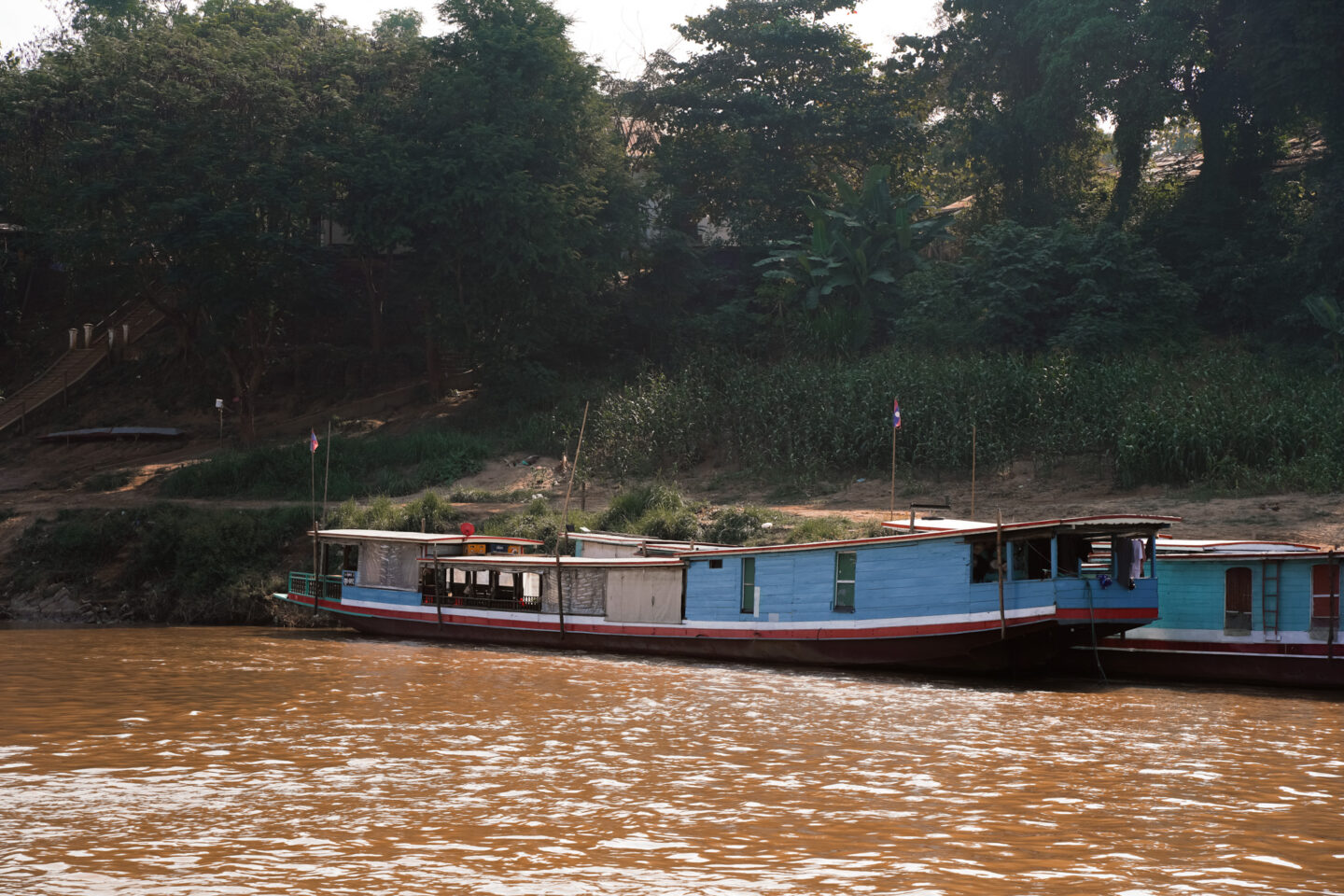
Many of the most important sights around Luang Prabang can be easily explored as part of an organised day trip. We particularly recommend excursions that combine several highlights, such as a boat trip on the Mekong, a visit to the Pak Ou Caves, the Kuang Si Waterfalls and a stay at an elephant conservation project.


These tours usually start in the morning in the city. First, you take a boat upstream on the Mekong River to the Pak Ou Caves, where thousands of Buddha statues stand in two sacred grottos, then you visit the Elephant Conservation Centre for lunch. The tour then continues to small villages or traditional craft centres along the river, before often ending at the famous Kuang Si Waterfalls. There is plenty of time to walk, swim or take photographs.
The main advantage of such a tour is that transport, boat trips and admission are organised, and you can comfortably experience several of the most beautiful places in the region in one day. At the same time, local guides provide exciting insights into the culture, religion and everyday life in Laos.
Hotel recommendation in Luang Prabang: Parasol Blanc Hotel

The Parasol Blanc Hotel is a stylish boutique hotel and one of the most charming places to stay in the city. When visiting Luang Prabang, it is worth choosing a quiet boutique hotel just outside the old town. The city is compact, so many attractions are still within easy reach, while at the same time you can enjoy more peace and quiet and a tropical garden atmosphere. Nestled in a lush garden with a lotus pond, it combines French colonial architecture with traditional Laotian elements. The rooms are elegant, bright and spacious – ideal for relaxing after a day of visiting temples or excursions to the waterfalls. The breakfast buffet is extensive and everything is very fresh.

Particularly noteworthy is the hotel’s own restaurant, which offers a modern interpretation of Laotian cuisine and is one of the city’s culinary insider tips. At the same time, the hotel is only a few minutes away from the old town, making it easy to reach sights, markets and restaurants. Those who value peace and quiet, style and an authentic atmosphere will find this the perfect base for a stay in Luang Prabang. A tuk-tuk will take you into town in a few minutes for 2-3 Swiss francs.
Cuisine in Luang Prabang


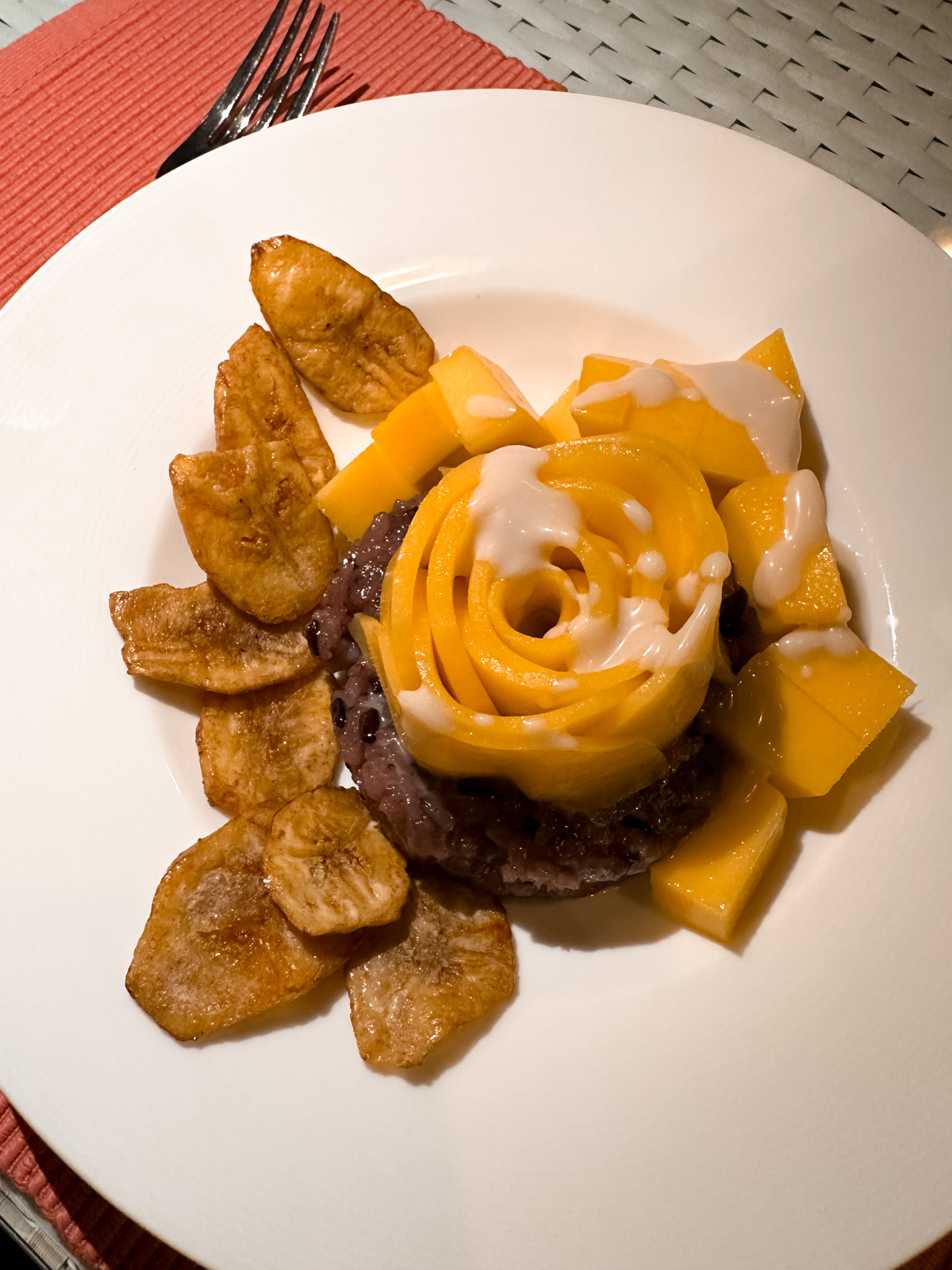
Laotian cuisine is less well known than that of its neighbouring countries, but it surprises with its intense flavours, fresh herbs and regional specialities. Luang Prabang in particular offers an exciting mix of traditional Laotian cuisine, French influences from the colonial era and modern restaurants.
Typical dishes to try include laap (a spicy herb salad with meat or fish), sticky rice – which is served with almost every meal in Laos – and grilled fish from the Mekong River.
As in other parts of Southeast Asia, there are many street food stalls and night markets offering local snacks. In the evenings in particular, Luang Prabang’s main street transforms into a lively market with food stalls and small restaurants.
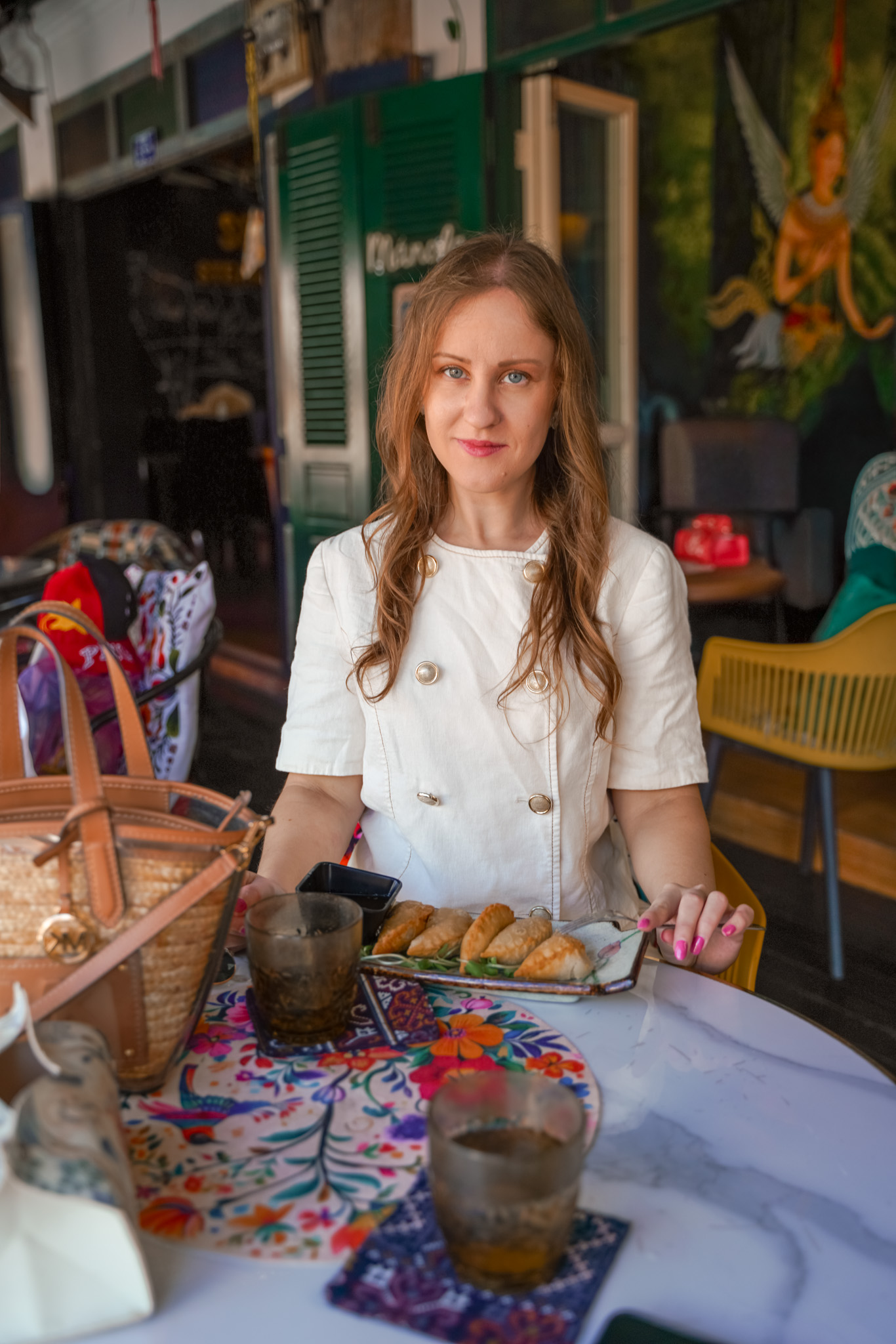
My personal tip: when choosing a restaurant, look for good Google reviews and places where lots of guests are eating – this is usually a reliable sign of quality. I personally avoided traditional street food, especially during my pregnancy. Fortunately, Luang Prabang has many excellent restaurants and hotel kitchens where you can enjoy Laotian cuisine in a relaxed and pleasant atmosphere.
Conclusion – Why Luang Prabang is particularly worthwhile
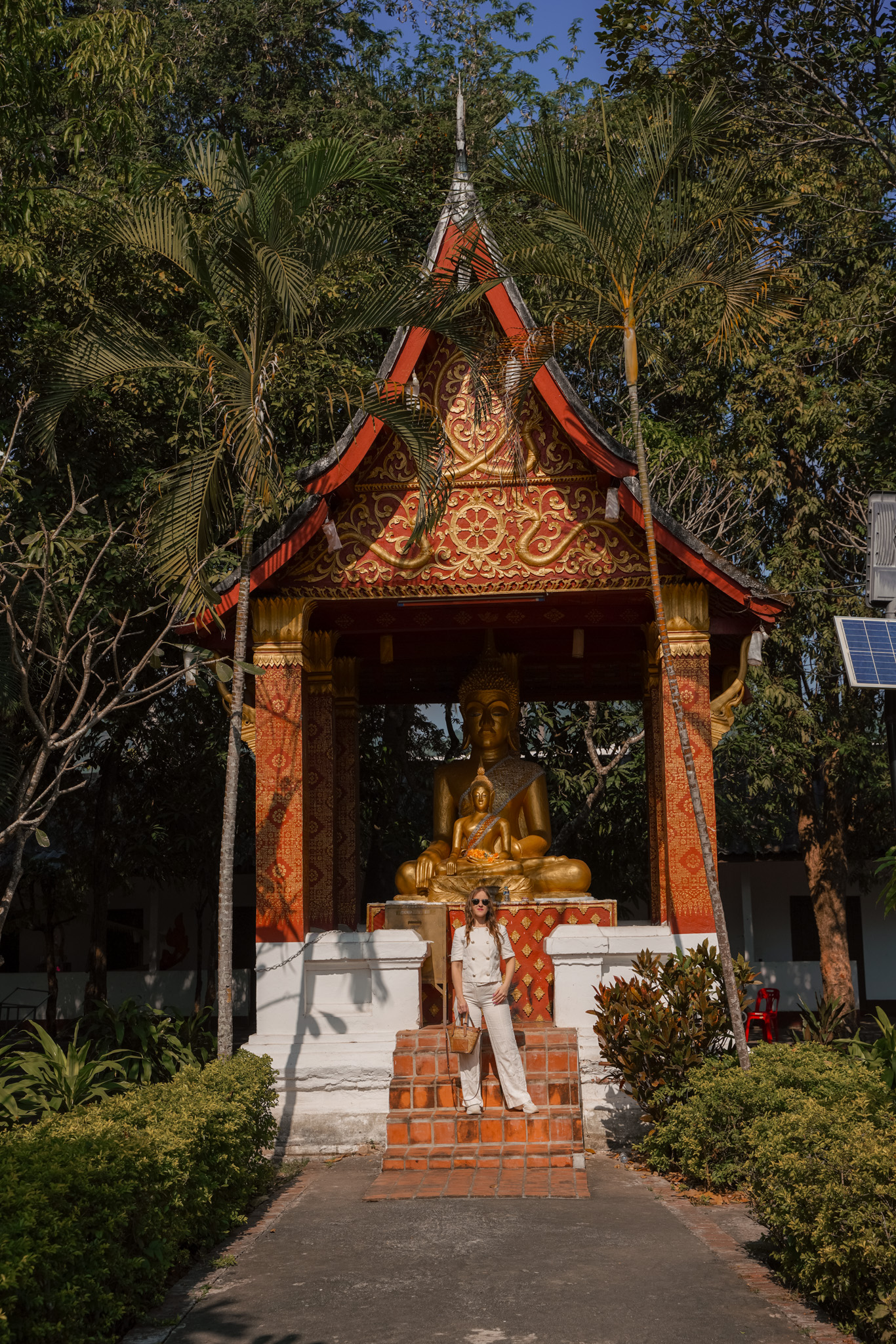


Luang Prabang is one of those places in Southeast Asia that immediately conveys a special atmosphere. The city is small, manageable and seems much quieter than many other destinations in the region – which is precisely what gives it its charm.
Between golden temples, colonial buildings and the backdrop of the Mekong River, a relaxed blend of culture, nature and spirituality unfolds. The variety of experiences in a relatively small area is particularly impressive: historic temples in the old town, spectacular waterfalls in the jungle and boat trips to spiritual caves along the river.
Anyone travelling to Laos should definitely include Luang Prabang in their itinerary. The city is the perfect place to get to know the country – authentic, scenically impressive and pleasantly relaxed at the same time.
As part of a tour of Southeast Asia, Luang Prabang offers a wonderful contrast to the livelier cities in the region and remains in the memory of many travellers for a long time.

